Sleep environment · Bedroom care
Air Purifiers and Bedding: Reducing Dust in Your Sleep Space
A fresher bedroom is rarely the result of one clever appliance. Air filtration can help capture some airborne particles, while clean bedding, thoughtful ventilation and a considered approach to dust traps address the room as a whole. The aim is not a sterile space, but a calmer, more comfortable place to rest.
A practical guide to choosing and placing an air purifier, caring for the textiles around your bed, and building a manageable dust-reduction routine.
First, understand what “bedroom dust” means
Dust is not one substance with one source. It is a changing mixture of tiny particles that can include fibres from clothing and household textiles, soil brought in from outdoors, fragments of skin, pollen and other material. Some particles settle on surfaces; others remain suspended in the air for a time before settling or being moved around again. Everyday activities—making the bed, walking across a carpet, changing clothes or opening a window—can disturb settled dust.
This matters because an air purifier and a cleaning routine work in different ways. A suitable purifier draws room air through a filter designed to capture certain particles. It can help reduce particles that pass through its system, but it does not remove settled dust from a bedside table, mattress or duvet. Nor does it replace the ordinary work of laundering, vacuuming and wiping surfaces.
For most homes, a useful strategy is layered rather than dramatic: keep the sleep surface fresh, reduce unnecessary dust-catching clutter, clean with methods that limit re-suspension, and ventilate when conditions allow. Filtration may complement these habits, particularly when a room feels stuffy or when outdoor pollen and other airborne particles are a concern. The right balance depends on the room, the household and individual sensitivities.
What an air purifier can—and cannot—do
An air purifier is a device that moves air through one or more filters. Models vary: some use mechanical particle filters, some include additional stages such as activated carbon, and some combine filtration with other technologies. A filter’s stated capabilities, the appliance’s airflow and the size of the room all influence how it performs. Rather than relying on a broad label such as “air cleaning,” check the manufacturer’s information for the specific unit and the conditions under which its performance is described.
A well-matched, properly maintained purifier may reduce airborne particles in its operating area. That is a narrower promise than “removing dust from the bedroom.” Dust that has already settled on fabric or furniture will still need to be cleaned. A purifier will not wash a pillow, lift debris from a mattress seam, or make a neglected filter work effectively. It also cannot correct every cause of poor indoor air quality.
Think of filtration as one element in a room-care routine, not a replacement for it. If you are choosing a unit, consider the room dimensions, the manufacturer’s recommended coverage, noise at the settings you are likely to use, filter availability, running costs and ease of cleaning. A technically capable appliance that is too noisy to run, too awkward to maintain or poorly suited to the room may be less useful in everyday life.
Claims about health effects deserve particular care. An air purifier is not a diagnosis or treatment for asthma, allergies or other medical conditions, and no single device can promise symptom relief for every person. If dust or indoor air quality is affecting your health, seek advice from an appropriate healthcare professional. For general home use, focus on the verifiable details of a product and on consistent, sensible care.
Choosing filtration with a clear head
Before buying, identify what you want the appliance to do. If your priority is particles, look closely at the filter type and the product’s stated particle-filtration performance. If odours are also a concern, check whether the unit includes a gas- or odour-focused filter and how the manufacturer describes its limitations. These functions are not interchangeable: a particle filter and a carbon-based filter address different things, and a multi-stage design is not automatically the best choice for every room.
Room coverage is another essential detail. Manufacturers may describe a recommended room size or quote airflow figures; use the information for the exact model rather than assuming that a compact appliance will be effective in a large bedroom. Layout matters too. A room with closed doors, substantial furniture or a purifier tucked behind a curtain may not behave like an open, unobstructed test space.
- Check the recommended room size. Compare it with the room where the purifier will actually run, not with an adjacent hallway or the entire floor of the house.
- Read the filter details. Find out what the main filter is designed to capture and whether replacement filters are readily available.
- Consider noise and settings. A quiet sleep setting may be more practical overnight, but check whether the unit’s airflow changes at that level.
- Understand upkeep. Note how often filters need attention or replacement according to the manufacturer, and follow those instructions.
- Be cautious with sweeping promises. Prefer clear specifications and realistic limits over claims that suggest an appliance can solve every indoor-air concern.
Some machines include features beyond filtration. If a model uses ionisation, ozone or another additional process, investigate the manufacturer’s explanation and relevant safety guidance before choosing it. A simple, transparent filtration approach may be easier to evaluate and maintain. The point is not to collect the most features; it is to choose a device suited to a particular room and use it as intended.
Where to place a bedroom air purifier
Placement is less about creating a perfect-looking corner and more about allowing air to move freely. Follow the appliance manual first: it will specify required clearances around the intake and outlet, suitable surfaces and any restrictions. In general, avoid wedging a purifier into a narrow gap, placing it behind heavy curtains, or surrounding it with laundry and bedding. Blocked airflow can undermine the very circulation the machine needs.
Position the unit where it can serve the room without becoming an obstacle. Keep it on a stable, level surface if the design calls for one, and keep electrical cables safely out of walking routes. A location near the bed may be convenient, but it is not automatically ideal; noise, draught, access to controls and manufacturer guidance all matter. If the unit is intended to run overnight, test its sound and airflow before settling on a permanent spot.
Allow the purifier to run for the period and at the setting recommended for your intended use. Some people choose continuous operation; others use it at particular times. The best routine is one that fits the appliance instructions, household needs and tolerance for sound and energy use. Avoid treating an indicator light as proof that the whole bedroom is dust-free: it can tell you something about the device or its filter, but it cannot assess every surface in the room.
Do not forget the filter itself. A loaded or overdue filter may not perform as intended, and maintenance varies by model. Follow the manual for cleaning, replacement and disposal. If a filter is washable, confirm that it is designed to be washed; rinsing a non-washable filter can damage it. Keep a note of the model and replacement type so the routine does not depend on remembering a small detail months later.
Bedding care: the closest layer to your sleep
Sheets, pillowcases and duvet covers sit directly against the body and are among the most practical places to begin. Regular laundering removes accumulated skin oils, perspiration and ordinary household debris. How often to wash them depends on personal preference, climate, health needs and the care label. A weekly wash is a useful routine for many households, but it is not a universal rule; adjust it to your circumstances and wash sooner when bedding is visibly soiled or needs freshening.
Care labels matter. Use the recommended temperature and cycle for the textile, and choose a detergent suited to the fabric and your household. Avoid overloading the machine: bedding needs room to move so it can be washed and rinsed properly. Dry items thoroughly before making the bed. Damp fabric left folded or piled can become musty, while bedding that is completely dry is easier to store and remake.
Rotate through spare sets where possible. This is less a luxury than a practical way to keep the bed comfortable while one set is in the wash. Cotton percale, sateen and linen differ in texture and drape, but each requires care guided by its own label. A breathable, comfortable sheet is useful only if its cleaning routine is realistic for the household.
Pillow protectors and mattress protectors provide an additional, washable layer between the bedding and the pillow or mattress. They do not make a bed immune to dust, and they should be laundered according to their care instructions. A protector that is easy to remove and wash can make maintenance more straightforward. Check the fabric and construction before purchase, particularly if breathability, fit or a quiet, flexible feel is important to you.
Pillows, duvets and the less frequent wash
Not every bedding layer belongs in the weekly laundry basket. Pillows, duvets and mattress toppers may need less frequent cleaning, and washing them incorrectly can damage filling or construction. Begin with the care label or manufacturer’s instructions. Some items are machine washable; others require professional care, airing or a specific drying method. Never assume that a natural filling, foam core or quilted protector can be treated like a cotton pillowcase.
Between washes, keep bulky bedding dry and well aired when practical. A brief airing can help a bed feel fresher, but it is not a substitute for laundering when an item is due for a wash. Make sure the room and the bedding are dry, and avoid leaving items outside where damp weather or pollen may be a concern. If you use a tumble dryer, follow the item’s instructions and ensure the filling dries through rather than only on the surface.
Down pillows, in particular, need careful attention to their care requirements. A washable pillow protector can help keep the shell cleaner between washes, while regular case changes maintain the layer closest to the face. For a pillow such as The Clean Bedroom Madison Down-Filled Pillow, the practical principle is the same as for any filled pillow: use a suitable protector and check the manufacturer’s directions before cleaning the pillow itself. An air purifier cannot replace that hands-on care.
Mattresses also benefit from measured maintenance. Vacuuming a mattress surface or its seams may be appropriate when the manufacturer permits it, but use a suitable attachment and avoid aggressive treatment. Rotate or turn a mattress only if its instructions allow. The goal is regular, gentle care—not a procession of harsh sprays or improvised cleaning methods that could damage materials.
Reduce dust traps without stripping the room of character
A bedroom does not need to become austere to be easier to keep clean. The most helpful edit is often a thoughtful one: clear the floor around the bed, give frequently used surfaces a little breathing room, and store clothes rather than leaving them in a persistent pile. Soft furnishings, books, decorative objects and open storage can collect dust, but their presence is not a problem in itself. What matters is whether they suit your cleaning routine.
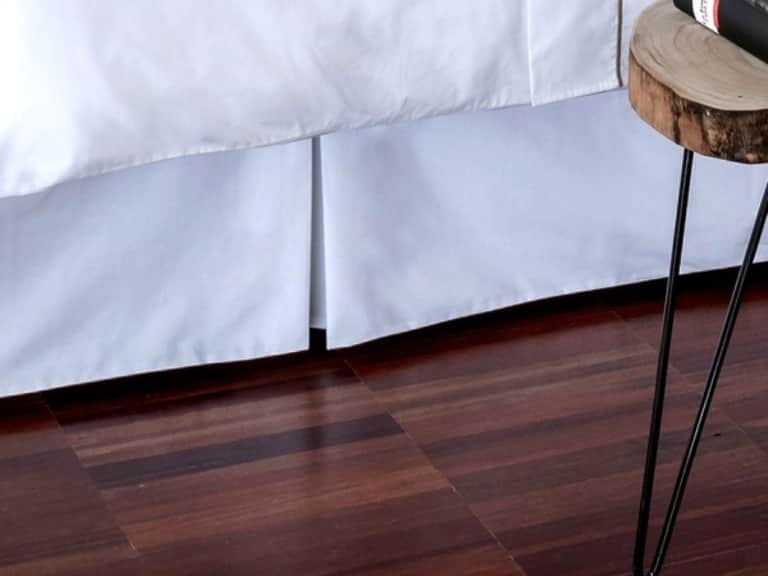
Under-bed areas deserve particular attention because they are easy to overlook. If you use storage boxes, choose containers that close and can be moved for cleaning. A bed skirt can create a neat visual finish and conceal under-bed storage, but it may also make the area less visible and less convenient to reach. Treat the space beneath the bed as part of the room rather than a forgotten zone: move storage periodically and clean the floor and bed frame.
The Bovi Simply Percale Bed Skirt is a tailored cotton layer designed to conceal a bed frame and under-bed storage. That is an aesthetic and organisational benefit, not a dust-proof barrier. If a bed skirt suits your room, make sure its care is manageable and lift or remove it when cleaning underneath. A polished bed is most useful when its finishing touches work with, rather than complicate, everyday upkeep.
Carpets and rugs may hold settled dust, while hard floors can make particles more visible and easier to wipe away. Neither surface removes the need for cleaning. Vacuum carpets regularly with equipment suited to the flooring, and use a damp—not soaking—cloth or mop on hard surfaces. If vacuuming tends to make the room feel dusty, try cleaning at a time when the room can be left undisturbed afterwards and follow the appliance’s maintenance instructions.
Ventilation still has a role
Filtration and ventilation are not the same thing. An air purifier circulates and filters room air; ventilation brings outdoor air into the home and allows indoor air to be exchanged, depending on the building and ventilation system. Opening a window may be useful when outdoor conditions are suitable, but it can also introduce pollen, traffic pollution, noise or damp air. There is no single window-opening rule that makes sense in every UK home or season.
Use ventilation thoughtfully. Consider local air quality, weather, security, noise and any sensitivities in the household. If you have mechanical ventilation, keep it maintained according to its instructions and do not block vents. For condensation or persistent damp, an air purifier is not the remedy: address the source of moisture and seek appropriate housing or professional guidance where necessary.
Dust can be one part of a wider indoor-air picture, but a purifier should not be expected to solve mould, smoke, chemical emissions or a ventilation problem by itself. If you notice persistent musty smells, visible mould, recurring condensation or unexplained symptoms, investigate the underlying issue rather than relying on an appliance to mask it.
A realistic weekly rhythm
The cleanest-looking bedroom is not always the easiest to maintain. A small, repeatable routine can be more effective than an ambitious deep clean that happens once and then disappears. Build tasks around existing habits: change the pillowcases when you change the sheets, wipe bedside surfaces before making the bed, and check the purifier filter when you do another household maintenance task.
Most days
- Let bedding air briefly when practical, then make the bed once it is dry.
- Put worn clothing and used towels into their usual laundry places.
- Keep purifier air inlets and outlets clear, if you use one.
- Open windows only when outdoor conditions and household needs make it sensible.
Weekly or as needed
- Change and launder sheets and pillowcases, following their care labels.
- Wipe bedside furniture and other frequently touched surfaces.
- Vacuum or clean the floor, including accessible edges around the bed.
- Check the purifier’s status and consult its instructions for maintenance.
Less frequent tasks might include washing pillows or duvets when their care instructions recommend it, cleaning beneath the bed, laundering a bed skirt, and checking whether a purifier filter is due for replacement. Keep a note of the last filter change if the device does not provide a clear reminder. Routine should be proportionate: a household with pets, frequent visitors or particular sensitivities may need a different schedule from a quieter room with fewer textiles.
Common misconceptions, gently corrected
“An air purifier means I no longer need to dust.”
No. Filtration addresses airborne particles that pass through the unit; it does not remove dust already settled on furniture, flooring or bedding. Continue to clean surfaces and textiles.
“The bigger the purifier, the better.”
Not necessarily. Suitability depends on the room, the device’s specifications, how it is placed and whether it can be maintained. A model designed for a much smaller room may be inadequate; an unnecessarily large or noisy unit may not fit your needs.
“A bed skirt keeps dust out from under the bed.”
A skirt can conceal the space and help create a more finished appearance, but it does not seal the area. Dust can still collect beneath the bed, so make access for cleaning part of the plan.
“Natural fibres never need special care.”
Natural fibres can be comfortable and breathable, but their cleaning needs vary. Linen, cotton, wool and down are not interchangeable in the laundry. Follow the label and avoid treatments that might harm the material.
“A spotless bedroom guarantees better sleep.”
Cleanliness can contribute to a more comfortable environment, but sleep is influenced by many factors, including routine, stress, health, noise and room temperature. A tidy room may feel calmer; it is not a guaranteed cure for sleep difficulties.
A calmer room is a practical composition
Think of a sleep space as a composition of layers. The mattress and pillow support the body; clean sheets create the immediate tactile experience; a duvet or blanket responds to the season; and the surrounding room determines how easy it is to rest and maintain the bed. Air filtration can sit within that picture as a quiet, functional element, but it should not dominate the room or the routine.
Choose bedding you can care for, store spare sets where they are easy to reach, and keep the floor and surfaces accessible enough to clean. Place a purifier where its airflow is unobstructed and its sound is comfortable. Maintain its filter on schedule. Ventilate with an eye to outdoor conditions, and give settled dust the straightforward attention it needs. These small decisions create a bedroom that feels considered without demanding perfection.
There is no need to chase an immaculate ideal. The more useful goal is a room that is fresh, welcoming and simple to maintain: clean pillowcases, dry bedding, a floor that is not hidden beneath unnecessary clutter, and equipment used within its limits. A purifier may help with airborne particles, but the lasting difference comes from pairing it with ordinary, repeatable care.
The takeaway
For a cleaner-feeling sleep environment, match any air purifier to the room, place it according to its instructions and maintain its filters. Wash sheets and pillowcases regularly, care for pillows and duvets according to their labels, and clean the surfaces and spaces where dust settles. Add ventilation when conditions permit, and address damp or other underlying air-quality concerns directly. The result is not a sterile bedroom, but a more thoughtfully cared-for place to begin and end the day.